Watercolor Floral Frame Background: A Guide to Organic Digital Design
In the evolving landscape of digital design, the quest for authenticity often leads creators back to traditional artistic mediums. Among these, the Watercolor Floral Frame Background has emerged as a staple for designers, event planners, and small business owners who seek to infuse their digital projects with organic warmth. Unlike rigid vector graphics or sterile stock photography, hand-painted floral elements carry an inherent imperfection that resonates with human emotion. Understanding how to effectively utilize these assets requires more than just downloading a file; it demands an appreciation for composition, technical specifications, and the versatile nature of watercolor as a design element.
The Anatomy of Hand-Painted Floral Assets
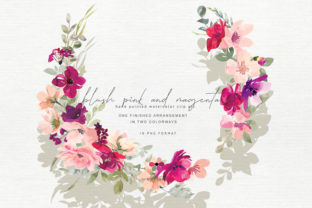
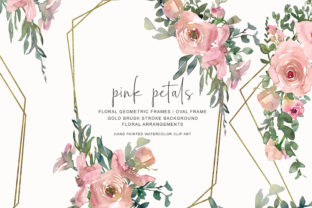
To fully leverage a Watercolor Floral Frame Background, one must first understand what distinguishes these assets from standard digital clip art. The primary value lies in the hand-painted origin. Each brushstroke, color bleed, and paper texture is captured during the digitization process, preserving the tactile quality of the original artwork. This authenticity is crucial for brands attempting to establish a personal connection with their audience.
Technically, these resources are typically delivered as separate PNG files. This format is non-negotiable for professional use because it supports transparency. When you work with a 300 DPI (dots per inch) resolution, you ensure that the delicate edges of the watercolor pigment remain crisp whether viewed on a high-resolution retina display or printed on physical cardstock. The absence of a background allows for infinite layering possibilities, transforming a simple frame into a complex, multi-dimensional composition.
Understanding Dimensions and Scalability
A common point of confusion for new users involves sizing. These floral frames generally range in size from approximately 5x5 inches up to 7.5x7.2 inches (13x13 cm up to 19.5x18.5 cm). While this may seem specific, it represents a strategic "sweet spot" for design versatility.
- Print Readiness: At 300 DPI, a 7-inch frame provides sufficient pixel density for standard invitation suites, greeting cards, and product packaging without requiring excessive upscaling that can introduce artifacts.
- Digital Flexibility: For web and social media use, these dimensions offer ample resolution. You can scale them down significantly for Instagram stories or website headers while maintaining visual clarity.
- Compositional Balance: The 5-to-7-inch range prevents the floral elements from overwhelming central content. They act as supportive borders rather than dominating focal points, ensuring text remains legible.
Mastering Composition: Beyond the Single Frame
The true power of a Watercolor Floral Frame Background unlocks when you stop treating it as a static border and start viewing it as a modular building block. The most effective designs often result from combining multiple elements rather than relying on a single pre-made arrangement.
The Layering Technique
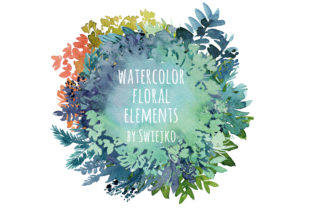
Creating a fresh floral composition is surprisingly intuitive when using round floral backgrounds. By placing two or three separate frames together, you can generate unique asymmetry that mimics natural growth patterns. For example, overlapping a lighter pastel frame with a deeper, more saturated botanical ring creates depth. This technique allows you to customize the density of the florals based on the amount of negative space required for your text or imagery.
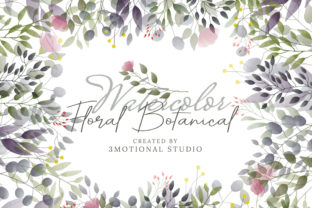
Furthermore, these round backgrounds serve as excellent foundations for other floral sets. If you possess individual stem elements or loose petals from the same collection, anchoring them against a circular watercolor wash helps ground the composition. The soft, diffused edges of the background wash provide a visual transition between the white canvas and the sharper details of the foreground flowers.
Practical Applications Across Industries
The utility of hand-painted floral elements extends far beyond wedding stationery. Various sectors benefit from the approachable aesthetic that watercolor provides.
Branding and Corporate Identity
For wellness brands, organic skincare lines, and boutique retailers, a Watercolor Floral Frame Background communicates values of purity and craftsmanship. When used in social media templates or email newsletters, these frames soften the commercial edge of marketing materials. They create a consistent visual language that feels curated yet accessible. Business owners can use these frames to highlight testimonials, announce new products, or frame seasonal promotions without the design feeling repetitive, simply by rotating or mirroring the PNG assets.
Event Planning and Stationery
While weddings are the obvious application, consider corporate galas, charity fundraisers, and baby showers. The ability to mix and match round backgrounds allows planners to adapt a single asset pack to multiple events within the same season. A spring palette might feature cherry blossoms, while shifting to autumnal tones using the same structural frames can completely alter the mood for a harvest festival.
Educational and Personal Projects
Teachers and educators frequently utilize these backgrounds for certificates, classroom decor, and worksheet borders. The gentle colors of watercolor are less distracting than bright vectors, making them ideal for learning environments. Similarly, digital scrapbookers and journal enthusiasts appreciate the high-resolution transparency for creating memory books that retain the look of traditional crafting.
Evaluating Suitability and Technical Considerations
Before integrating a Watercolor Floral Frame Background into your workflow, it is important to assess whether this style aligns with your project goals. While versatile, watercolor is not a universal solution.
When to Choose Watercolor
- Emotional Resonance Required: If the project demands empathy, nostalgia, or romance, watercolor outperforms flat design.
- Organic Themes: Sustainability, beauty, health, and artisanal products pair naturally with hand-painted textures.
- Customization Needs: If you need to adapt a design across various aspect ratios (square posts, vertical stories, horizontal banners), separate PNG elements offer superior flexibility compared to fixed JPEG backgrounds.
Limitations and Best Practices
Users should be aware that watercolor textures can sometimes compete with highly detailed photography. If your central image is busy or colorful, a heavy floral frame may cause visual clutter. In such cases, opt for a lighter wash or reduce the opacity of the frame layer. Additionally, because these are raster images (pixels) rather than vectors, they cannot be scaled up infinitely. Always check the final print size against the native resolution of the 300 DPI file to avoid pixelation.
Color matching is another consideration. Since these are scans of real paint, exact CMYK or Pantone matching can be challenging. Professional printers usually handle this well, but if brand color accuracy is critical, request a physical proof before running a full print job. The beauty of watercolor lies in its variation, so embrace slight shifts in hue as part of the medium's charm rather than viewing them as errors.
Optimizing Workflow with Transparent Assets
To maximize efficiency, organize your Watercolor Floral Frame Background files systematically. Because every image is a separate PNG file, naming conventions matter. Label files descriptively (e.g., "Round_Frame_Pink_7inch.png") rather than relying on generic serial numbers. This saves significant time when searching for specific elements during tight deadlines.
Consider creating master template files in your preferred software (Photoshop, Canva, Illustrator) where favorite combinations are pre-layered. Having a "go-to" asymmetrical arrangement ready allows you to swap out text or photos instantly while maintaining a cohesive brand aesthetic. This modular approach transforms individual art assets into a scalable design system.
Conclusion: The Enduring Appeal of Analog Art in Digital Spaces
The Watercolor Floral Frame Background represents a bridge between traditional artistry and modern digital necessity. Its value is not merely decorative; it is functional, providing a flexible framework for communication that feels genuinely human. Whether you are designing a luxury invitation suite, branding a sustainable business, or creating educational materials, the combination of high-resolution transparency, manageable dimensions, and hand-painted authenticity offers a unique solution to the challenge of standing out in a saturated visual market.
By understanding the technical parameters and embracing creative composition techniques like layering and mixing, users can extract maximum value from these assets. The result is design work that breathes, evolves, and connects with audiences on an emotional level. In a world increasingly dominated by artificial intelligence and algorithmic generation, the deliberate imperfection of hand-painted florals remains a powerful tool for authentic expression.