Evaluating Beautiful Floral Graphics and Illustration for Print and Digital Projects
Selecting the right visual assets is a critical step in any creative workflow, whether you are designing professional stationery or crafting personal DIY projects. Beautiful Floral Graphics and Illustration represents a specific category of botanical design resources that bridge the gap between fine art and functional graphic elements. Unlike generic stock photography or simple clip art, these illustrations are typically created with versatility in mind, serving as foundational building blocks for textiles, paper goods, and digital media. For designers and crafters aged 20 to 50 who value both aesthetic quality and technical utility, understanding the distinct characteristics of this resource type is essential for making informed purchasing decisions.
Distinguishing Features from Standard Stock Imagery
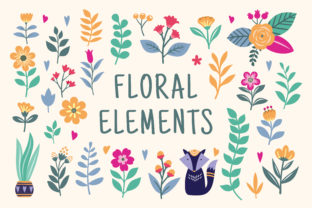
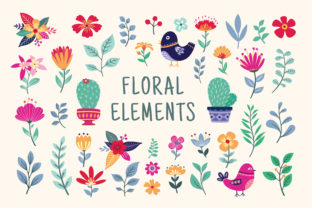
When comparing Beautiful Floral Graphics and Illustration against standard stock photography or basic vector packs, several key differentiators emerge. Standard floral stock photos often capture a realistic moment but lack the compositional flexibility required for surface pattern design or border creation. In contrast, high-quality floral illustrations are frequently designed with negative space and modularity in mind. This allows individual elements—such as stems, leaves, and blooms—to be rearranged, scaled, and colored without losing visual coherence.
Furthermore, the artistic intent differs significantly. While AI-generated imagery is becoming prevalent, curated floral illustration sets often possess a deliberate stylistic consistency that algorithms currently struggle to replicate across an entire collection. When evaluating options, consider whether the asset offers a unified artistic voice. A cohesive set ensures that a wedding invitation suite matches the accompanying thank-you cards and signage, whereas mixing disparate sources can result in a disjointed final product. The value proposition here lies not just in the image itself, but in the systematic design logic applied to the collection.
Technical Formats and Workflow Compatibility
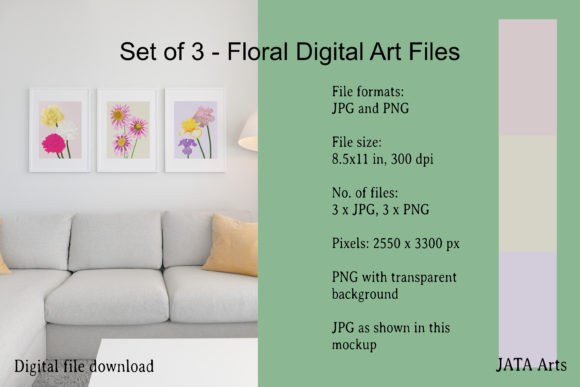
A primary decision factor for professional designers and serious hobbyists is file format availability. The inclusion of AI, EPS, PNG, and JPG files in a single ZIP archive addresses multiple workflow requirements simultaneously. Understanding when to use each format is crucial for maximizing the utility of Beautiful Floral Graphics and Illustration.
- AI and EPS (Vector/Editable): These formats are indispensable for print-on-textile applications and large-format signage. They allow for infinite scaling without pixelation and enable color adjustments to match specific Pantone references. If you plan to alter the composition or recolor elements to fit a brand palette, vector source files are non-negotiable.
- PNG (Transparent Raster): Ideal for digital overlays, scrapbooking, and quick mockups. The transparent background eliminates the need for manual masking, saving significant time during the layout phase. This format is particularly useful for cupcake toppers, stickers, and web graphics where layering is required.
- JPG (Flattened Raster): Best suited for reference, low-resolution proofs, or simple backgrounds where transparency and editing are not required. While less versatile than PNG or EPS, JPGs ensure compatibility with basic software and older devices.
When comparing resources, verify that the vector files are truly editable paths rather than embedded raster images within an EPS container. True vector construction ensures longevity and adaptability across various media, from delicate address labels to large banners.
Assessing Fit for Specific Applications
Not every floral asset is suitable for every project. Evaluating the intended end-use helps determine if a specific set of Beautiful Floral Graphics and Illustration aligns with your needs. The following breakdown highlights best-fit scenarios versus situations where alternative resources may be superior.
Textiles and Apparel
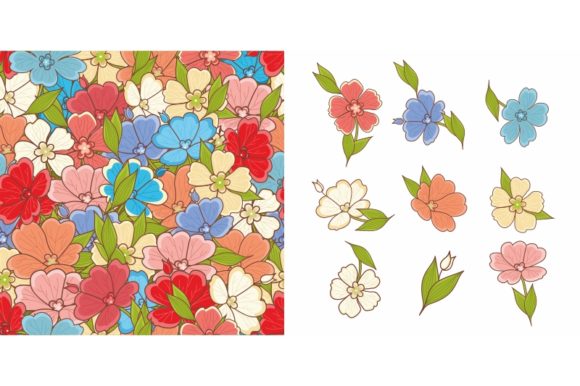
For clothing, accessories, and fabric printing, resolution and repeat capability are paramount. Illustration sets designed for textile use typically feature higher DPI (300+) and seamless tiling potential. If your project involves personal t-shirts or custom fabric bolts, prioritize sets that offer isolated elements on transparent backgrounds or pre-made seamless patterns. Generic web-resolution florals will appear pixelated and unprofessional when printed on fabric. Additionally, consider the color profile; print-ready assets should ideally support CMYK conversion without significant color shifting.
Stationery and Paper Goods
DIY invitations, announcements, and calendars require a balance of detail and legibility. Overly dense floral illustrations can compete with typography, making text difficult to read. When selecting assets for stationery, look for designs with ample whitespace or "wreath" configurations specifically framed for text placement. Beautiful Floral Graphics and Illustration tailored for paper goods often include pre-arranged borders and corners, reducing the design time compared to assembling individual botanical elements from scratch. However, if you require hyper-realistic botanical accuracy for a scientific publication, traditional illustration archives or specialized photography may be more appropriate than stylized graphic sets.
Digital Media and Web Design
For blogs, websites, and social media, file size and loading speed become relevant tradeoffs. While high-resolution vectors are excellent for print, they can bloat web pages. In this context, the PNG and JPG versions included in the purchase are often more practical. Compare the visual weight of the illustration against your site’s minimalist or maximalist aesthetic. Delicate line work suits modern, clean interfaces, while lush, painterly florals complement vintage or romantic themes. Ensure the license permits web embedding if you are designing for client sites.
Tradeoffs and Decision Factors
Choosing premade illustration sets involves inherent tradeoffs compared to commissioning custom artwork or creating assets from scratch. Acknowledging these limitations helps manage expectations and prevents buyer’s remorse.
Customization vs. Convenience: Premade sets offer immediate access to professional-quality art at a fraction of the cost of custom commissions. However, you are limited to the artist’s existing style and color choices. Even with editable AI/EPS files, drastically altering the fundamental aesthetic can be time-consuming. If your project demands a highly specific, unique visual identity that must be exclusive to your brand, custom illustration remains the superior choice. Beautiful Floral Graphics and Illustration is best viewed as a high-end starting point or a solution for projects where exclusivity is secondary to efficiency and beauty.
Cohesion vs. Variety: A curated set guarantees stylistic harmony, which is vital for event branding like weddings or parties. Conversely, this cohesion can feel restrictive if you need diverse botanical species or varying artistic techniques within a single project. Some designers mitigate this by purchasing multiple sets from the same creator or marketplace ecosystem to maintain consistency while expanding variety. Always review the full preview of a set before purchasing to ensure it contains enough variation in scale and orientation to sustain interest across multiple deliverables.
Licensing Considerations: Usage rights vary significantly between resources. While many sets permit commercial use for physical products (stickers, clothing, stationery), restrictions often apply to digital redistribution or mass production. Before integrating any asset into a product for sale, carefully review the license terms. A lower-priced asset with restrictive licensing may ultimately cost more in legal risk or missed revenue opportunities than a premium asset with broad commercial rights.
Making the Final Selection
The decision to utilize Beautiful Floral Graphics and Illustration should stem from a clear assessment of project scope, technical requirements, and budget. These resources excel in scenarios demanding high aesthetic value combined with production readiness. They are particularly effective for:
- Small Business Owners: Creating cohesive packaging, labels, and marketing materials without hiring a full-time illustrator.
- Event Planners and DIY Brides: Developing unified visual themes across invitations, signage, and favors.
- Crafters and Makers: Producing sellable items like stickers, apparel, and scrapbooking supplies with professional-grade artwork.
- Designers: Accelerating workflow by using high-quality base elements that can be customized rather than drawn from zero.
Conversely, seek alternative solutions if you require photorealism, exclusive copyright ownership, or highly specialized botanical accuracy. By weighing the technical specifications (AI/EPS/PNG/JPG inclusion) against your specific application needs, you can select floral assets that enhance rather than hinder your creative output. Ultimately, the best resource is one that seamlessly integrates into your workflow while elevating the perceived value of your final creation, whether that is a tangible garment, a printed invitation, or a digital experience.