Watercolor Floral Backdrop: Elevate Stationery Design
Creating cohesive wedding stationery or event branding often requires balancing artistic beauty with strict production deadlines. A high-quality watercolor floral backdrop serves as the foundational element that ties these visual components together without requiring hours of custom illustration. For designers, small business owners, and DIY creators, utilizing a pre-made collection is not merely a shortcut; it is a strategic decision to maintain professional consistency across various print formats. The organic texture of watercolor adds warmth and sophistication that flat vector graphics often lack, making it particularly effective for invitations where emotional resonance is key.
Strategic Sizing for Comprehensive Stationery Suites
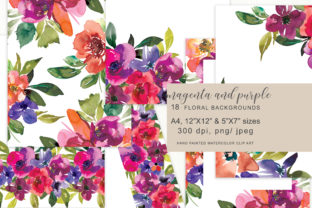
One of the most significant challenges in stationery design is adapting a single artistic concept to multiple physical dimensions without losing resolution or compositional balance. This specific collection addresses that friction point by providing three distinct, industry-standard sizes: 12x12 square, 5x7 portrait, and A4. Understanding why these specific dimensions matter helps maximize the utility of the assets.
The 12x12 Square Format
The 12x12 inch square backdrop is exceptionally versatile beyond standard photo albums. In modern wedding stationery, this size is frequently used for welcome signs, seating chart backdrops, or social media announcement tiles. Having a dedicated square composition ensures that the floral arrangement is centered and balanced specifically for this aspect ratio, rather than being a cropped version of a rectangular image. This prevents awkward white space or severed botanical elements at the edges, which is crucial when designing menu cards or table numbers that require central text placement.
Optimizing for 5x7 Invitations
The 5x7 size remains the gold standard for formal invitation suites. When working with a pre-made watercolor floral backdrop in this exact dimension, you eliminate the guesswork of scaling. The artwork is composed to frame the negative space naturally, guiding the viewer’s eye toward the center where typography resides. This size is also ideal for save-the-dates and thank-you cards, allowing you to create a matching suite using identical assets. Consistency here builds brand recognition for the event and reduces the cognitive load on the designer during the layout phase.
A4 Versatility for International and Informational Print
Including A4 backdrops extends the collection's utility beyond standard US sizes. This format is essential for international clients or for creating detailed informational inserts such as accommodation guides, itinerary schedules, or ceremony programs. A4 provides ample vertical space for longer text blocks while maintaining the decorative border effect. For educators or bloggers repurposing these assets for worksheets or digital downloads, A4 offers a familiar canvas size that prints perfectly on standard home and office printers without resizing artifacts.
Technical Specifications That Ensure Print Quality
Visual appeal matters, but technical integrity determines whether a design succeeds in production. This collection includes both PNG and JPEG files at 300 DPI in RGB color mode, along with transparent background options. Each specification serves a practical purpose in the design workflow.
- 300 DPI Resolution: This pixel density is non-negotiable for professional printing. While screens display images clearly at lower resolutions, commercial printers require 300 dots per inch to render crisp edges and smooth color gradients. Using lower-resolution files often results in pixelation or blurriness, especially in the delicate washes characteristic of watercolor art.
- Transparent PNG Files: The inclusion of transparent backgrounds transforms these backdrops from static images into flexible design layers. You can overlay them onto colored cardstock textures, combine them with other illustrations, or place them over photographs without a distracting white box. This layering capability is vital for creating depth in digital mockups and ensuring seamless integration with existing brand colors.
- JPEG Alternatives: While PNGs offer transparency, JPEGs provide smaller file sizes that are easier to share via email or upload to web-based design platforms. Having both formats available means you never have to convert files yourself, reducing the risk of accidental compression artifacts or metadata loss.
- RGB Color Profile: Although CMYK is traditionally associated with print, many modern digital presses and online print-on-demand services optimize for RGB input to preserve vibrancy. Watercolors rely on subtle luminosity that can sometimes appear muddy in direct CMYK conversion. Starting with high-quality RGB files allows your print provider’s RIP software to handle the color translation accurately, often yielding brighter, more faithful results.
Enhancing Workflow Efficiency for Professionals
For freelancers and agency designers, time is directly correlated to profitability. Creating custom watercolor illustrations from scratch involves scanning, cleaning, color-correcting, and composing—processes that can consume an entire project budget. Utilizing a curated set of six unique designs (provided as two variations each across the three sizes) offers immediate variety without the overhead of original creation.
This efficiency does not mean sacrificing customization. Because the collection includes multiple variations, you can mix and match borders and corners to create unique layouts for different pieces of the same suite. For example, use one variation for the main invitation and a complementary variation for the RSVP card. This approach maintains thematic unity while preventing visual monotony. Small business owners producing seasonal marketing materials benefit similarly; having a library of reliable, high-resolution florals allows for rapid turnaround on promotional flyers or social media graphics without hiring an illustrator for every campaign.
Practical Applications Beyond Wedding Stationery
While wedding invites are the primary use case, the versatility of these watercolor floral backdrops extends to numerous creative and commercial scenarios. Educators and homeschoolers find the soft aesthetic perfect for certificate templates, classroom decor, or gentle learning materials that avoid overstimulation. Bloggers and content creators use the 12x12 and A4 formats for Pinterest pins, ebook covers, and newsletter headers, where the organic feel helps humanize digital content.
Marketers and event planners can leverage these assets for corporate retreats, baby showers, or anniversary celebrations where a softer touch is appropriate. The transparency feature makes it easy to adapt the florals to existing corporate color palettes simply by adjusting the underlying background layer. This adaptability makes the collection a long-term asset rather than a single-use purchase.
Considerations for Optimal Implementation
To get the best results, users should understand the limitations and best practices associated with pre-made digital assets. First, always check your printer’s specific color profile requirements before finalizing files. While RGB works well for many digital presses, some traditional offset printers may still request CMYK conversion; performing a soft proof in your design software can help anticipate color shifts. Second, consider paper choice carefully. Watercolor effects look most authentic on textured or matte papers; glossy stocks can sometimes flatten the delicate gradient transitions that give watercolor its charm.
Additionally, while these backdrops are designed with ample negative space, typography selection plays a crucial role in readability. High-contrast fonts work best against busy floral areas, while lighter scripts should be reserved for the cleaner central zones. Testing print samples at actual size is always recommended to ensure the interplay between background art and text meets legibility standards. By treating these backdrops as professional-grade components rather than mere decoration, creators can produce stationery and digital assets that feel bespoke, polished, and intentionally crafted.