Floral Pencil Drawing One Line Art for Design
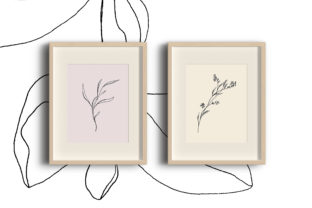
The intersection of organic warmth and digital precision defines modern surface design, and few assets bridge this gap as effectively as floral pencil drawing one line art. For designers, stationers, and brand creators, these elements offer a unique aesthetic that combines the tactile nostalgia of graphite with the infinite scalability of vector graphics. Unlike complex illustrations that can dominate a layout, single-line florals provide structure without visual heaviness. They serve as sophisticated anchors in logo design, delicate borders for wedding invitations, and seamless repeats for textile patterns. When sourced as EPS vector files, these drawings cease to be static images and become malleable design components that adapt to any scale or color palette while retaining their hand-drawn integrity.
The Strategic Value of Vector-Based Line Work
Understanding the technical foundation of floral pencil drawing one line art is essential for maximizing its utility. While the visual style mimics traditional media, the underlying format determines its professional viability. Rasterized sketches lose quality when resized and are difficult to recolor accurately. In contrast, EPS vector files define lines through mathematical paths rather than pixels. This distinction matters significantly for production workflows. A vector-based one-line flower can be scaled from a 2cm business card icon to a 3m trade show backdrop without aliasing or blurring.
Furthermore, vectorization allows for non-destructive editing. If a client requires a specific Pantone match for a branding project, you can adjust the stroke color instantly without masking or repainting. The "pencil" texture in high-quality vectors is often achieved through variable width strokes or textured path effects, ensuring the organic feel remains intact even after digital manipulation. This technical flexibility transforms a simple sketch into a robust asset library, reducing the time spent recreating similar motifs for different applications.
Elevating Stationery and Invitation Suites
In the stationery market, differentiation relies on balancing trend awareness with timeless elegance. Floral pencil drawing one line art excels here because it avoids the overly polished look of standard clip art while remaining cleaner than raw charcoal scans. For wedding invitations, these elements function as excellent framing devices. Because the line weight is consistent yet expressive, it pairs beautifully with serif typography and ample negative space. Designers can use individual stems to create custom monogram wreaths or arrange multiple elements to form an asymmetric border that guides the eye toward key information.
Practically, using EPS elements streamlines the proofing process. Clients often request changes to floral density or arrangement late in production. With modular vector flowers, you can reposition, rotate, or delete individual blooms in seconds rather than redrawing the entire composition. This agility supports higher client satisfaction and protects profit margins by minimizing revision hours. Additionally, the single-line aesthetic translates exceptionally well to blind debossing and foil stamping, as the continuous path ensures clean die creation without broken lines or muddy details.
Building Cohesive Surface Patterns
Creating surface patterns requires a different mindset than illustration; it demands rhythm, balance, and repeatability. Floral pencil drawing one line art elements are particularly suited for this task because their simplified forms reduce visual noise when tiled. Complex, shaded botanicals can create unintended moiré effects or dark spots in a repeat, whereas single-line designs maintain an airy, breathable texture. This makes them ideal for packaging paper, fabric printing, and wallpaper where the pattern must remain engaging at both macro and micro scales.
- Seamless Integration: Vector endpoints can be snapped together precisely, allowing designers to build custom repeats without visible seams or alignment errors.
- Scale Versatility: Adjust the density of the pattern simply by scaling the motif group up or down within the pattern tile definition.
- Colorway Variations: Generate seasonal collections rapidly by applying global color swatches to the same base line art structure.
- Layering Capability: Combine one-line florals with solid shapes or watercolor washes to add depth without losing the defining linear skeleton.
For entrepreneurs selling digital papers or print-on-demand products, this efficiency directly impacts catalog growth. Instead of illustrating new botanics for every collection, you can remix existing one-line assets into fresh configurations, maintaining a recognizable brand style while expanding product offerings.
Refining Logo Design and Brand Identity
Logos demand reduction. A mark must be legible at favicon size and distinctive enough to own mental real estate. Floral pencil drawing one line art offers a middle ground between abstract geometry and literal representation. The continuous line suggests flow, growth, and connectivity—attributes valuable for wellness brands, florists, spas, and sustainable businesses. However, successful logo adaptation requires treating the art as a starting point, not a final solution. Raw sketch vectors often contain unnecessary anchor points that complicate embroidery or vinyl cutting.
Professionals should view these assets as structural guides. Use the one-line floral to establish proportion and gesture, then refine the curves using bezier tools to ensure optical smoothness. The goal is to retain the human touch of the pencil aesthetic while achieving the geometric stability required for long-term brand use. This hybrid approach prevents the logo from looking like generic stock art while avoiding the inconsistencies of purely freehand digitization. Always test the refined mark in single-color black and white first; if the one-line floral holds its identity without texture or gradient, it is ready for versatile application.
Navigating Licensing and Creative Limitations
While floral pencil drawing one line art is versatile, it is not universally appropriate. The minimalist nature of single-line work means it lacks the volume and shading needed for certain contexts, such as realistic book covers or detailed scientific illustration. Users must assess whether the abstraction level aligns with their communication goals. If the project requires botanical accuracy or emotional depth through lighting, these elements may feel too decorative or sparse.
Licensing also requires careful attention. Not all EPS files labeled as "one line art" carry commercial rights suitable for resale or trademarking. Designers intending to incorporate these florals into logos must verify that the license permits modification and exclusive use, as many standard licenses prohibit using unaltered stock elements in trademarks. Similarly, those creating surface patterns for mass retail should confirm whether attribution is required or if there are unit caps. Investing in extended licenses or commissioning custom vectorizations of public domain sketches can mitigate legal risks while ensuring the final output is truly proprietary.
Optimizing Workflow for Mixed Media Projects
Integrating floral pencil drawing one line art into mixed media workflows maximizes its expressive potential. Digital designers often struggle to make vector art feel authentic. By combining crisp EPS lines with scanned paper textures or subtle grain overlays, you can reintroduce the tactile quality that defines the genre. This technique is especially effective for social media templates and blog headers where screen resolution can flatten delicate lines. Setting the blend mode of the line art to "Multiply" over a textured background simulates ink on paper more convincingly than opaque black strokes.
For educators and content creators teaching art or design, these assets serve as excellent pedagogical tools. Deconstructing a one-line floral reveals principles of gesture, negative space, and economy of line. Students can trace the vector paths to understand how complex organic forms are simplified into essential movements. This analytical benefit extends beyond aesthetics; it trains the eye to see structure beneath decoration. Whether used for commercial production or creative education, the true value of these assets lies in their ability to distill natural complexity into functional, adaptable design elements that respect both tradition and technology.