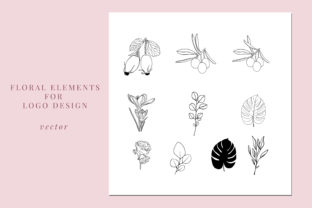
Elevating Brand Identity with Floral Graphics Illustration in EPS Format
In the competitive world of visual branding, the difference between a forgettable mark and an iconic logo often lies in the quality of its foundational assets. When designers and business owners seek to evoke elegance, growth, or organic beauty, they frequently turn to floral graphics illustration. However, not all botanical assets are created equal. For professional logo design, the technical format is just as critical as the artistic style. Utilizing a curated set of floral graphics, specifically illustration 10 elements in EPS format, provides the versatility and precision necessary for high-end brand identity work.
The Strategic Advantage of Vector-Based Botanical Art
The primary reason professional designers insist on Encapsulated PostScript (EPS) files for logo creation is scalability. Unlike raster images such as JPEGs or PNGs, which are composed of a fixed grid of pixels, EPS files rely on mathematical equations to define lines, curves, and shapes. This distinction is paramount when working with intricate floral graphics illustration.
A logo must function across a vast spectrum of applications. It needs to look crisp on a tiny social media avatar, legible on a business card, and flawless when scaled up for a storefront sign or vehicle wrap. When you utilize floral elements in EPS format, you can resize the artwork infinitely without any loss of quality or pixelation. The petals remain sharp, and the stems stay smooth regardless of the output size. This infinite scalability ensures that the delicate details inherent in botanical art are preserved in every medium, maintaining brand consistency and professional polish.
Editability and Customization for Unique Logos
Beyond mere scaling, the EPS format offers unparalleled editability. Logo design is rarely about dropping a pre-made graphic onto a canvas and calling it done. It requires manipulation, integration, and refinement. With vector-based floral elements, designers can:
- Modify Anchor Points: Adjust the curve of a petal or the length of a stem to better fit the typography or overall composition.
- Recolor Effortlessly: Change the entire color palette of a floral element in seconds to match specific brand guidelines without degrading image quality.
- Separate Elements: Isolate individual flowers, leaves, or buds from a larger cluster to create custom arrangements.
- Adjust Stroke Weights: Thicken or thin lines to ensure visibility at small sizes or to match the weight of accompanying logotypes.
This level of control transforms generic stock art into bespoke brand assets. When working with a collection like "illustration 10 elements," the designer has a modular toolkit rather than a static picture, allowing for endless variations tailored to the client’s specific vision.
Selecting the Right Floral Aesthetic for Brand Messaging
While the technical benefits of EPS are clear, the artistic selection process requires equal attention. Floral graphics illustration carries significant semiotic weight. Different botanical styles communicate different values, and choosing the wrong aesthetic can create cognitive dissonance for the audience.
Line Art vs. Solid Silhouettes
For modern, minimalist brands, single-line floral illustrations or clean silhouettes are often the superior choice. These styles reduce visual noise and pair exceptionally well with sans-serif typography. They suggest sophistication, clarity, and contemporary relevance. In contrast, detailed engravings or watercolor-style vectors (converted to EPS) convey heritage, luxury, and artisanal craftsmanship. When evaluating a set of 10 floral elements, it is vital to assess whether the line weight and complexity align with the brand's voice. A tech startup focused on sustainable energy might prefer geometric, stylized leaves, while a boutique wedding planner would likely opt for flowing, romantic peonies or roses.
Cultural and Seasonal Relevance
Botanical imagery is deeply rooted in cultural symbolism. A comprehensive floral graphics illustration pack should offer variety to address these nuances. For instance, cherry blossoms may signify renewal and transience, making them suitable for wellness or lifestyle brands, whereas oak leaves represent strength and endurance, fitting for financial or legal services. Furthermore, seasonality plays a role in retail and hospitality branding. Having access to diverse floral elements allows businesses to subtly update their secondary branding or marketing materials throughout the year while keeping the core logo consistent.
Integrating Floral Elements into Modern Design Workflows
The practical application of floral graphics extends beyond the initial logo concept. In today’s omnichannel marketing environment, brand assets must be adaptable. A well-constructed EPS floral suite serves as a foundational design system.
Creating Secondary Marks and Patterns
A primary logo is essential, but brands also need secondary marks, favicons, and background patterns. The individual elements within a floral illustration set can be repurposed to create these supporting assets. A single bud from the collection might serve as a bullet point in a presentation template or an app icon. Multiple elements can be tiled to create seamless packaging paper or website backgrounds. Because the source files are vectors, these derivatives maintain perfect alignment with the master brand identity.
Cross-Platform Compatibility
EPS remains the industry standard for print production, but modern workflows often require multiple formats. Fortunately, EPS files act as the master source from which other formats can be generated. Designers typically keep the EPS as the archival master while exporting SVGs for web use and high-resolution PNGs for digital mockups. Starting with high-quality floral graphics illustration in EPS ensures that every downstream derivative is optimized for its specific platform. This workflow prevents the common pitfall of trying to upscale a low-resolution web image for print, which invariably results in poor quality.
Key Considerations Before Acquiring Floral Assets
Before integrating floral graphics into a project, designers and stakeholders should evaluate several practical factors to ensure long-term utility and legal safety.
- Licensing Clarity: Verify that the license permits commercial logo use. Some licenses restrict usage to editorial or personal projects only. For a logo, an extended or exclusive license is often required to trademark the resulting design.
- Vector Integrity: Not all files labeled "EPS" are true vectors. Some are merely raster images embedded in an EPS container. Always open the file in vector software like Adobe Illustrator or Affinity Designer to confirm that paths and anchor points exist before purchasing or downloading.
- Style Cohesion: When using a set of 10 elements, ensure they share a consistent stroke width, corner radius, and level of detail. Mixing disparate styles within a single brand identity creates visual friction. The best illustration packs are designed as cohesive families.
- Negative Space Management: Effective logo design relies on positive and negative space balance. Evaluate how the floral elements interact with text. Overly dense illustrations can make logotypes difficult to read. Look for graphics that have been optimized for combination with typography.
The Enduring Appeal of Botanical Branding
Trends in graphic design cycle rapidly, yet floral graphics illustration maintains a permanent place in the visual lexicon. This longevity stems from humanity’s innate connection to nature. In an increasingly digital landscape, organic forms provide a necessary counterbalance, offering warmth and approachability that geometric abstraction sometimes lacks.
By prioritizing technical excellence through EPS formats and exercising thoughtful artistic selection, designers can harness this timeless appeal without sacrificing modern functionality. Whether creating a wordmark for an organic skincare line or an emblem for a florist, the combination of scalable vector technology and evocative botanical art provides a robust foundation for memorable, effective brand identities. The investment in high-quality, editable floral elements pays dividends across every touchpoint, ensuring the brand blooms beautifully in any context.