Chocolate Vanilla Watercolor Floral: Elevating Warm-Toned Design Projects
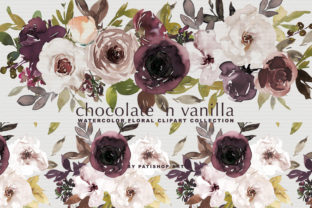
There is a distinct warmth to the Chocolate Vanilla Watercolor Floral collection that sets it apart from standard botanical assets. While many floral clipart packs lean heavily into bright primaries or cool pastels, this specific palette captures the rich, comforting tones of cocoa, cream, caramel, and muted earth. For designers, small business owners, and hobbyists, this color story solves a frequent problem: finding organic elements that feel sophisticated and cozy rather than overly vibrant or juvenile. The hand-painted watercolor texture adds an authentic, tactile quality that digital vectors often lack, making these 57 high-resolution files a versatile toolkit for projects requiring a touch of artisanal elegance.
Curating Cohesive Brand Identities for Food and Lifestyle
The most immediate application for chocolate and vanilla hues lies in culinary branding and packaging. If you are designing for a bakery, coffee roaster, chocolatier, or skincare line featuring natural ingredients like shea butter or vanilla bean, color accuracy matters. Generic flowers can sometimes clash with brown packaging or warm photography. These specific watercolor florals are designed to harmonize with those exact tones.
Consider a freelance designer creating a label for a small-batch hot sauce or a craft candle maker. Using the seamless patterns (16 x 16 inches) allows for custom wrapping paper or box liners that extend the brand experience beyond just the logo. Because the pattern is seamless at 300 DPI, it prints crisply on physical materials without pixelation or visible tiling lines. This level of detail signals quality to the consumer before they even open the product. For social media managers, these same patterns serve as non-distracting backgrounds for Instagram stories or Pinterest pins, keeping the focus on product photography while maintaining a consistent aesthetic theme.
Wedding Stationery and Event Design Applications
Neutral and earth-tone weddings have surged in popularity, moving away from stark whites toward mocha, latte, and champagne palettes. Wedding stationers and DIY brides often struggle to find floral accents that match this specific vibe without looking muddy or dull. The Chocolate Vanilla Watercolor Floral collection addresses this by balancing dark chocolate depths with soft vanilla highlights.
The seven large bouquets (approx. 10 x 9 inches) are sized perfectly for invitation suites. They provide enough visual weight to anchor a 5x7 invitation card without overwhelming the typography. More importantly, the collection includes 45 separate elements. This modularity is crucial for event design. You might use a full bouquet for the main invitation, but switch to smaller individual blooms for place cards, menu headers, or table numbers. This creates a cohesive look across all printed collateral without repetitive copying and pasting of the same large image. The separate elements also allow for custom monogram framing, where individual petals and leaves can be arranged organically around initials rather than relying on a pre-made, rigid circle.
Digital Content Creation and Web Layouts
Blogger, educators, and digital marketers know that white space is essential, but empty space can sometimes feel sterile. The floral drops (approx. 17 x 6 inches) included in this set are specifically formatted for horizontal layouts. These are ideal for website headers, email newsletter dividers, or YouTube thumbnails. Unlike square bouquets that require awkward cropping, these elongated arrangements fit naturally into standard web banners.
For content creators in the education or coaching space, these warmer tones convey approachability and calmness. A financial advisor using these florals in a PDF workbook softens the intimidation factor of budgeting spreadsheets. A teacher creating classroom decor finds that chocolate and vanilla tones are gender-neutral and age-appropriate, avoiding the stereotypical pink/blue divide. The transparent PNG format means these elements layer effortlessly over colored blocks or textured backgrounds in Canva, Photoshop, or Procreate, allowing for rapid customization without needing advanced masking skills.
Understanding Technical Specifications for Print vs. Digital
Before incorporating these assets into a workflow, it is helpful to understand how the file specifications translate to real-world usage. All 57 files are delivered as PNGs at 300 DPI. This resolution is the industry standard for professional printing, ensuring that edges remain sharp and colors stay true when transferred to paper, fabric, or cardstock. However, users should note the varying dimensions.
- Large Bouquets (10 x 9): Best for primary focal points like poster art, book covers, or main invitations.
- Wreaths (14 x 14 and 14 x 13): Sized for framing text, logos, or photos. The slight variation in size between the two wreaths offers flexibility for different aspect ratios.
- Separate Elements (5 x 4 and 3 x 3): These smaller sizes are perfect for accent work, bullet points in documents, or corner embellishments on business cards.
- Seamless Patterns (16 x 16): Large enough for textile printing or scrapbooking paper, yet scalable down for digital backgrounds.
Because these are raster images (PNG) rather than vectors, they cannot be infinitely scaled up without losing quality. Users planning billboard-sized prints or vehicle wraps should stick to the largest elements or use them as texture overlays rather than primary graphics. For everything from business cards to A3 posters, however, the resolution is more than adequate.
Strategic Considerations Before Use
While the aesthetic appeal is obvious, practical application requires some forethought. The "chocolate vanilla" descriptor implies a specific temperature. When pairing these florals with other design elements, avoid mixing them with cool-toned blues or neon greens, which can create visual dissonance. Instead, lean into complementary warm neutrals, terracottas, forest greens, or metallic golds to enhance the watercolor’s natural undertones.
Licensing is another critical consideration for entrepreneurs and freelancers. Always verify whether your purchase includes commercial rights if you plan to sell products featuring these designs. While personal use for wedding invites or home decor is generally straightforward, selling digital templates, physical stationery, or branded merchandise often requires a specific license tier. Understanding this distinction protects your business from copyright issues and ensures the original artists are compensated fairly.
Finally, consider file management. With 57 individual assets, organization prevents workflow bottlenecks. Renaming files descriptively (e.g., "chocolate-vanilla-wreath-round.png" instead of "img_0042.png") saves hours of searching later. Creating dedicated folders for patterns versus individual elements streamlines the design process, especially when working under tight deadlines. This collection offers significant creative potential, but its value is fully realized only when integrated thoughtfully into a structured design system that respects both the artistic style and technical requirements of the final output.